
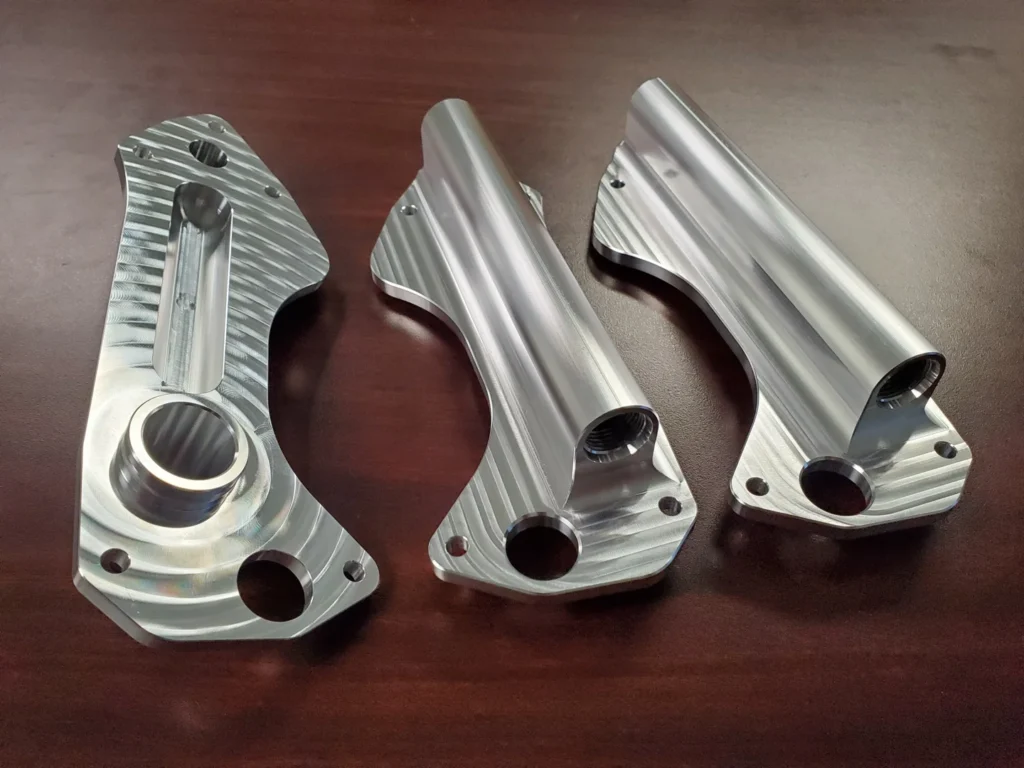
What Is Precision Machining — and Why Does It Matter?
Precision machining is a manufacturing process that removes material from a workpiece to create parts with extremely tight dimensional accuracy. It’s the foundation of modern industrial production — from surgical implants to aerospace components to the tube mill equipment that keeps manufacturing lines running.
Here’s a quick answer if that’s what you need:
What is precision machining?
- A subtractive manufacturing process that cuts, mills, turns, or grinds raw material into finished parts
- Uses CNC (Computer Numerical Control) equipment guided by CAD/CAM software
- Achieves tolerances as tight as ±0.0002 inches (±0.005 mm) for mission-critical components
- Works with metals (aluminum, titanium, stainless steel), plastics (PEEK), alloys, and more
- Used in aerospace, medical devices, automotive, defense, tube and pipe manufacturing, and industrial equipment
The global precision machining market was valued at around $105.6 billion in 2023 and is projected to reach $172.8 billion by 2030 — a clear sign that demand for tight-tolerance, high-quality parts is only growing.
I’m Jarek Szpakowski, and at ITSE Inc. in Lake Zurich, IL, I’ve applied precision machining — including 5-axis CNC capabilities — to build custom tube mill equipment, ID/OD scarfing systems, and OD bead choppers for manufacturers across the U.S. The sections below break down everything you need to know about how this process works, what it can do, and why it matters for your production line.
Relevant articles related to precision machining:
Understanding Precision Machining and How It Differs from Conventional Methods
At its core, precision machining is a form of subtractive manufacturing. Unlike additive manufacturing (like 3D printing), which builds parts layer by layer, subtractive manufacturing starts with a solid block of raw material—often called a blank or workpiece—and systematically carves away the excess until only the desired geometry remains.
What elevates this process beyond standard machining is the sheer level of dimensional accuracy. While basic workshop tools might cut parts to within a fraction of an inch, high-precision operations regularly measure their success in microns. For an in-depth look at the fundamentals, check out The No-Nonsense Guide to Understanding CNC Machining.
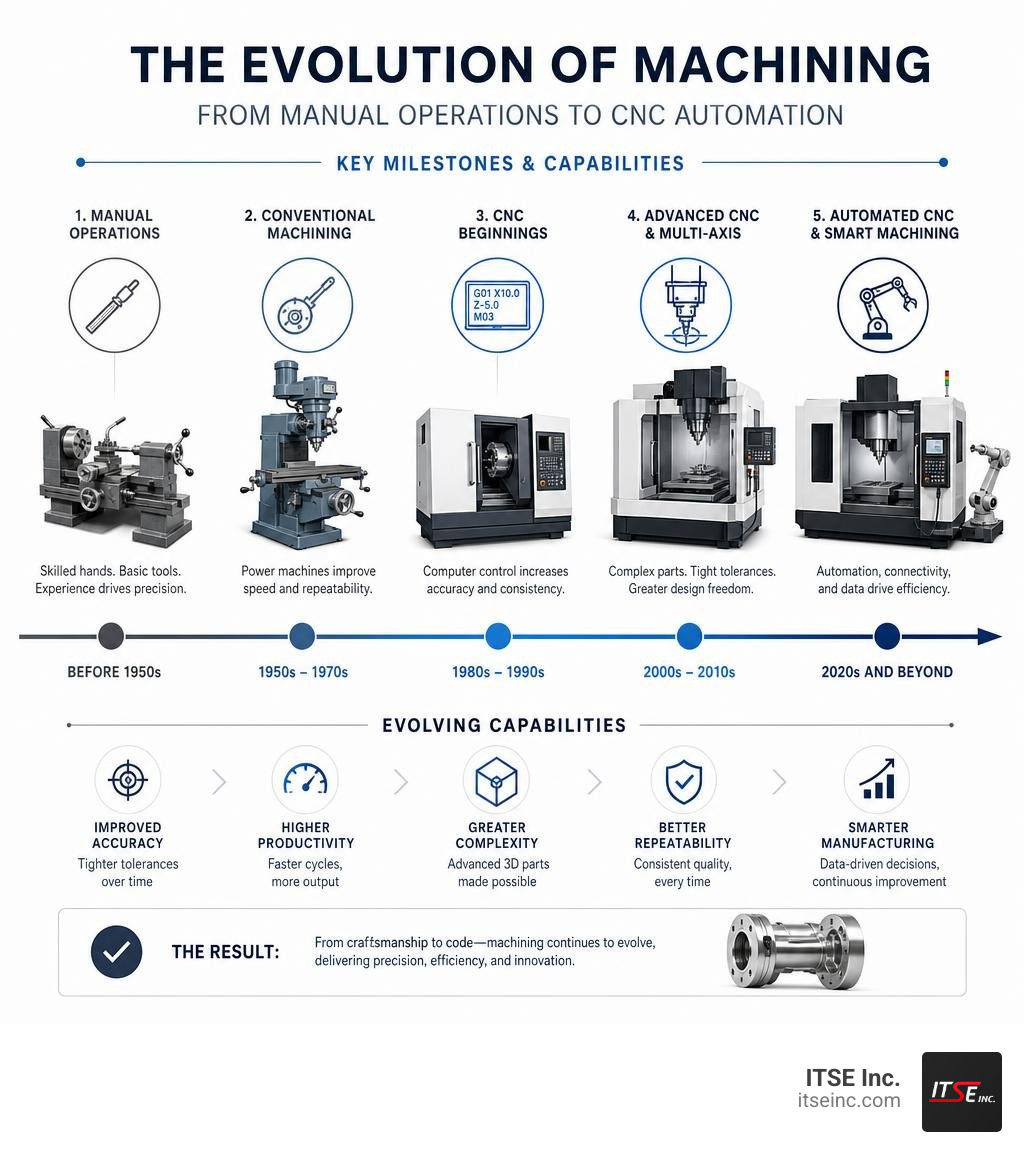
The Evolution of Precision Machining Technology
Historically, machining was a highly manual, labor-intensive craft. A single skilled technician stood over a manual lathe or milling machine, turning handwheels and checking dimensions with analog calipers. Every single part required individual setup, and human error was an ever-present risk.
The mid-20th century saw the introduction of Computer Numerical Control (CNC) technology, which revolutionized the trade. By pairing automated machine tools with predefined software programs, manufacturers could control cutting speed, depth of cut, feed rate, and tool rotation with absolute consistency.
Today, the workflow relies heavily on Computer-Aided Design (CAD) and Computer-Aided Manufacturing (CAM) software:
- CAD software is used to construct a highly detailed 3D digital model of the part.
- CAM software translates that 3D model into “G-code”—the machine-readable language that guides the CNC toolpaths.
This digital thread ensures unmatched repeatability. Whether a shop produces a single prototype or a batch of ten thousand parts, the CNC machine executes the exact same movements every single time, drastically reducing scrap rates and eliminating human variation.
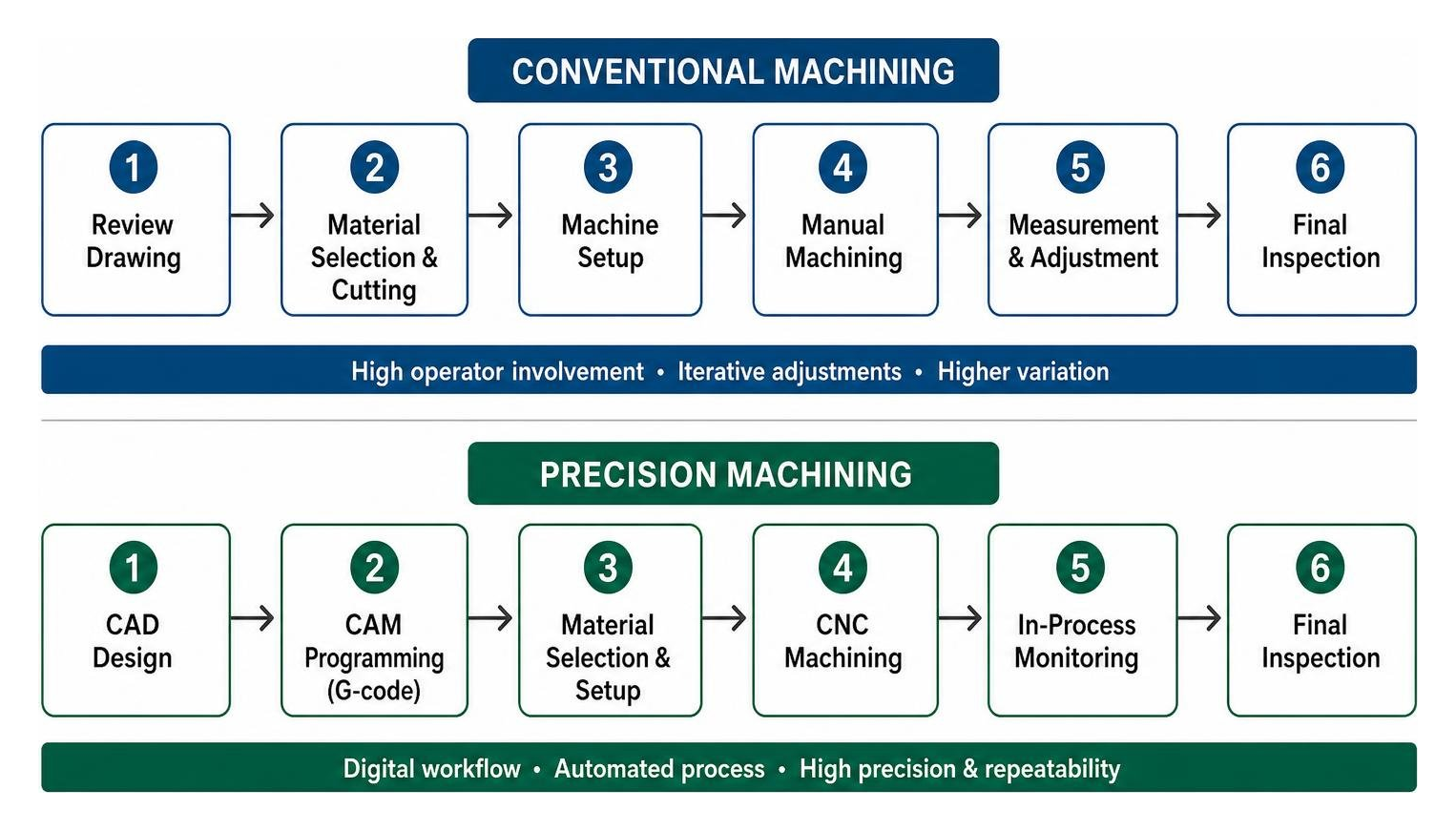
Key Differences: Conventional vs. Precision Machining
To truly appreciate the value of high-precision manufacturing, it helps to compare it directly to conventional machining. The differences lie in the tolerances achieved, the level of operator intervention required, and how material waste is managed.
| Feature | Conventional Machining | Precision Machining |
|---|---|---|
| Typical Tolerances | ±0.005″ to ±0.010″ | ±0.0002″ to ±0.0005″ (or tighter) |
| Control Method | Manual handwheels or basic power feeds | Advanced CNC with CAD/CAM integration |
| Operator Role | Continuous manual adjustment and measurement | Programming, setup, and automated monitoring |
| Scrap Rates | Higher (dependent on operator fatigue/skill) | Extremely low (software-optimized toolpaths) |
| Complexity | Best for simple geometric shapes | Capable of highly complex, multi-axis geometries |
Core Processes and Technologies in Modern Manufacturing
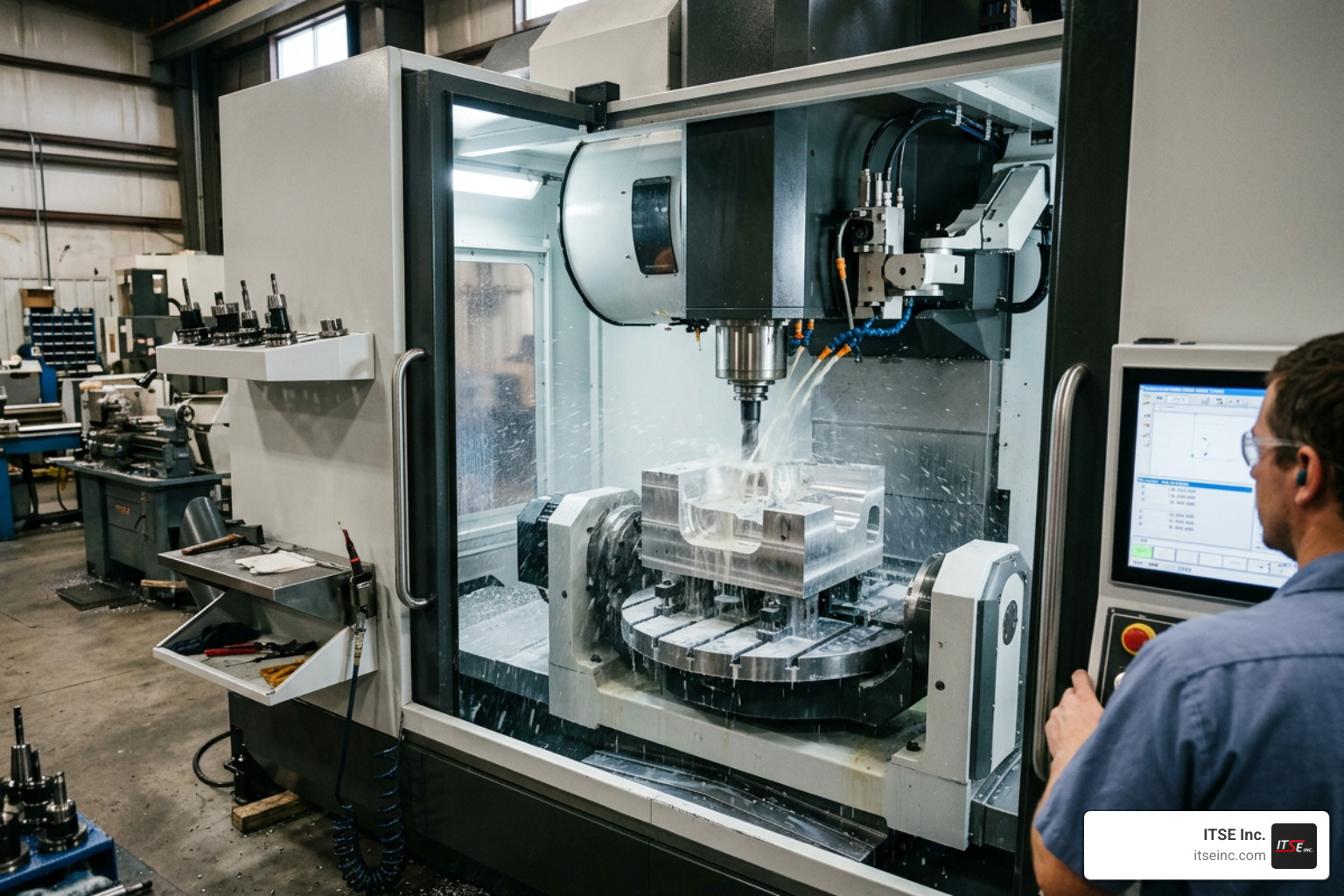
Achieving micro-level accuracy requires a diverse toolkit. Modern machine shops utilize several specialized subtractive processes, each tailored to specific geometries and material properties.
CNC Milling and Turning
Milling and turning are the twin workhorses of the machining world.
- CNC Milling: The workpiece remains stationary (secured in a vise or fixture) while a rotating cutting tool moves along multiple axes to shave away material. While traditional mills operate on 3 axes (X, Y, and Z), advanced shops utilize 5-axis CNC machining. This technology allows the cutting tool—or the part itself—to rotate on two additional axes, enabling the machine to approach the workpiece from any angle. This eliminates multiple redundant setups, reduces cycle times by up to 60%, and makes it possible to machine complex contours and undercuts in a single operation. If you are looking for local expertise in Northern Illinois, you can learn more about Precision 5-Axis CNC Machining Services in Lake Zurich.
- CNC Turning: Here, the process is reversed. The workpiece rotates at high speed in a spindle while a stationary cutting tool moves along its surface to create cylindrical parts. For incredibly small, complex, or high-volume rotational components, shops turn to Swiss turning. Originally developed for the watchmaking industry, Swiss-style lathes feed the raw stock through a guide bushing, supporting the material right next to the cutting tool to eliminate deflection and achieve superior dimensional stability.
Advanced Grinding and Electrical Discharge Machining (EDM)
When standard cutting tools reach their physical limits—either due to the hardness of the material or the extreme surface finish requirements—non-traditional machining methods take over.
- Double Disc and Precision Grinding: Rather than using a tool with a defined cutting edge, grinding utilizes abrasive wheels to wear away micro-amounts of material. Processes like double disc grinding, centerless grinding, and surface grinding are essential for achieving flat, parallel surfaces and mirror-like finishes on hardened metals.
- Electrical Discharge Machining (EDM): This non-traditional process uses electrical sparks to erode material from a workpiece. In wire EDM, a thin brass or copper wire acts as an electrode, slicing through hardened steels and exotic alloys with extreme precision without ever making physical contact with the part. This completely eliminates mechanical stress and chatter, making it ideal for delicate geometries.
The Role of Automation and Flexible Manufacturing Systems (FMS)
To remain competitive in today’s global market, machine shops must maximize machine utilization. This is where automation and Flexible Manufacturing Systems (FMS) come into play.
An FMS integrates CNC machines with automated material handling systems, such as robotic arms and multi-pallet changers. This setup allows for:
- 24/7 Lights-Out Operation: The system can run completely unattended overnight, automatically loading raw blanks and unloading finished parts.
- High-Mix, Low-Volume Efficiency: An FMS can dynamically switch between different jobs without requiring manual retooling, making it just as efficient for small custom batches as it is for high-volume production.
- Reduced Lead Times: By eliminating human-dependent bottleneck stages, automated setups keep spindles turning continuously.
For local businesses looking to optimize their supply chain, exploring Top Precision CNC Machining Services in Lake Zurich for Your Manufacturing Needs is an excellent starting point.
Materials, Tolerances, and Surface Finishes
A successful machining project relies heavily on matching the right material with the correct cutting parameters. Different materials exhibit unique mechanical properties, thermal stability, and machinability ratings, all of which directly impact the final part quality. For a solid introduction to these concepts, read Making the Cut: A Beginner’s Guide to Precision CNC Machining.
Multi-Material Applications in High-Precision Manufacturing
Modern precision shops must be highly versatile, capable of cutting everything from soft plastics to ultra-hard aerospace alloys.
- Aluminum (e.g., 6061-T6): The most popular choice for general-purpose machining. It is lightweight, highly machinable, corrosion-resistant, and anodizes beautifully.
- Stainless Steel (e.g., 304, 316L, 17-4 PH): Highly valued for its strength and corrosion resistance. It is commonly used in medical devices, marine hardware, and food processing equipment.
- Titanium (e.g., Grade 5 / TC4): Renowned for its incredible strength-to-weight ratio and biocompatibility. However, titanium has low thermal conductivity, meaning it traps heat at the cutting edge, requiring advanced cooling techniques and rigid setups.
- PEEK and High-Tech Plastics: Polyetheretherketone (PEEK) and other engineering plastics offer excellent mechanical strength, chemical resistance, and thermal stability, making them ideal lightweight replacements for metal components in medical and aerospace applications.
Achieving Micro-Level Tolerances and Surface Roughness
In high-precision manufacturing, a tolerance of ±0.0002 inches (±0.005 mm) is a standard benchmark for mission-critical parts. To put that in perspective, a single human hair is roughly 0.003 inches wide—meaning these machines routinely cut to a fraction of a hair’s width.
Achieving this level of accuracy requires careful management of several variables:
- Thermal Expansion: As tools cut, friction generates heat. Metals expand when warm and contract when cool. Precision shops must maintain strict climate controls within their facilities and use temperature-controlled cutting fluids to prevent dimensional drift.
- Chatter Prevention: Mechanical vibration (chatter) between the tool and the workpiece can ruin surface finishes and accelerate tool wear. Machinists must optimize spindle speeds, feed rates, and workholding rigidity to ensure a smooth cut.
- Surface Roughness (Ra): Measured in micro-inches or microns, surface roughness dictates how smooth a part is. High-precision processes can achieve surface finishes as smooth as Ra 0.8 to 0.4 μm (or even mirror-like finishes through specialized lapping and grinding), which is critical for sealing surfaces and high-friction applications.
Industry Applications and the Additive Manufacturing Debate
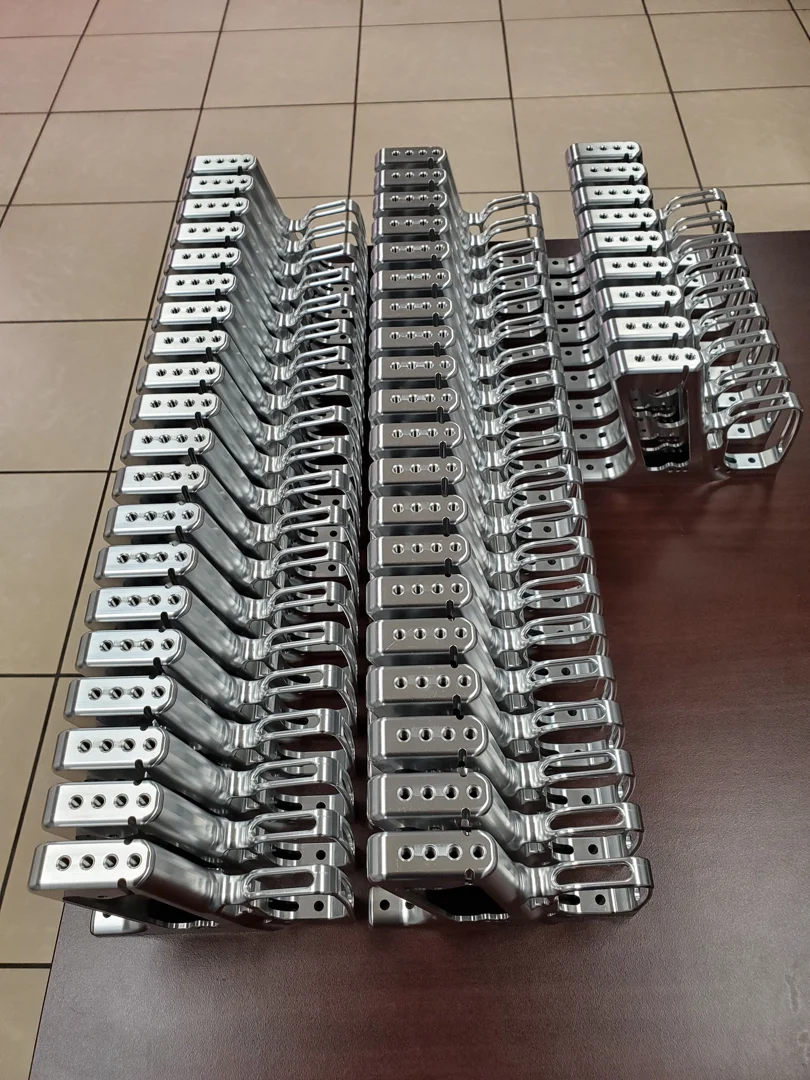
Precision components are the silent enablers of modern technology. From the deep ocean to outer space, these parts keep critical systems running without failure.
Critical Industries Relying on Precision Machining
Several sectors rely heavily on high-precision manufacturing, where even a microscopic deviation can lead to catastrophic failure:
- Heavy Industrial & Tube Mill Manufacturing: In the tube and pipe industry, equipment must run continuously under extreme loads. At ITSE Inc., we utilize precision manufacturing to craft custom tube mill equipment, OD bead choppers, and ID scarfing systems that deliver flawless cuts and long service lives.
- Aerospace and Defense: Satellite optical mounts, jet engine components, and landing gear parts require absolute structural integrity and must meet strict aerospace standards.
- Medical Devices: Implantable orthopedic screws, surgical instruments, and microfluidic diagnostic devices demand biocompatible materials and flawless surface finishes.
- Automotive & Robotics: High-performance engine components, transmission gears, and robotic joints require tight tolerances to minimize friction and wear over millions of operational cycles.
Subtractive vs. Additive Manufacturing: A Comparative Analysis
With the rapid advancement of industrial 3D printing, a common question arises: Will additive manufacturing replace subtractive machining?
The short answer is no. Instead, the two technologies are increasingly used in tandem.
- Additive Manufacturing (3D Printing): Excellent for rapid prototyping, complex internal geometries (like lattice structures), and reducing weight. However, 3D-printed parts often suffer from poor surface finishes, porous structures, and dimensional tolerances that rarely match the accuracy of a CNC machine.
- Subtractive Machining: Unmatched in its ability to achieve ultra-tight tolerances, structural density, and mirror-like surface finishes across a vast range of materials.
- Hybrid Manufacturing: The future lies in combining both methods. For instance, a complex aerospace component can be printed to near-net shape (reducing material waste by 70-90%), and then finished on a 5-axis CNC mill to achieve the final, critical tolerances on mating surfaces. For a deeper dive into prototyping strategies, check out Rapid CNC Prototyping and How to Avoid Making a Mess of It.
Quality Control, Careers, and the Future of the Industry
In high-precision manufacturing, a part is only as good as your ability to measure it. Quality control is not an afterthought—it is baked into every step of the manufacturing process.
Inspection Protocols and Quality Assurance Standards
To guarantee that parts meet exact specifications, modern machine shops employ advanced metrology equipment:
- Coordinate Measuring Machines (CMM): These systems use highly sensitive physical probes or optical sensors to measure the physical geometry of a part, comparing the real-world measurements against the original CAD model with sub-micron accuracy.
- Optical and Laser Inspection Systems: Systems like Keyence or OASIS optical comparators can measure dozens of dimensions simultaneously in a matter of seconds, providing instant feedback to operators on the shop floor.
- Industry Certifications: Leading shops adhere to strict quality management systems. Certifications like ISO 9001 (general manufacturing) and AS9100 (aerospace) ensure complete material traceability, standardized processes, and continuous improvement protocols.
Educational Pathways and Careers for Precision Machinists
The manufacturing sector is currently facing a significant challenge: a severe shortage of skilled CNC machinists and operators. It is estimated that the U.S. manufacturing sector could face a shortage of up to 2.1 million skilled workers by 2030.
For those interested in entering the field, there are several rewarding pathways:
- Certificate Programs: Many community colleges and technical schools offer accelerated CNC machining certificates that can be completed in under a year, preparing students for immediate entry into the workforce.
- Associate of Applied Science (AAS) Degrees: Two-year programs in Advanced Manufacturing or Industrial Technology provide deeper training in CAD/CAM programming, metallurgy, and advanced multi-axis machining.
- On-the-Job Apprenticeships: Many manufacturers offer paid apprenticeship programs, allowing next-generation machinists to earn a living while learning the trade from experienced journeymen.
Frequently Asked Questions about Precision Machining
What is the typical tolerance limit for high-precision CNC machining?
While standard machining typically holds tolerances around ±0.005 inches, high-precision CNC machining routinely achieves tolerances as tight as ±0.0002 inches (±0.005 mm). For specialized applications, ultra-precision machining can even reach down to the micron or sub-micron level.
How does a Flexible Manufacturing System (FMS) improve efficiency?
An FMS improves efficiency by automating the loading and unloading of workpieces and tooling. This reduces setup times, eliminates human error, and allows for 24/7 “lights-out” manufacturing, making it highly cost-effective for both high-mix, low-volume jobs and massive production runs.
What is the difference between roughing and finishing cuts?
- Roughing Cuts: Performed at high feed rates and deep cuts to remove bulk material as quickly as possible. The focus is on speed and material removal rate (MRR), leaving a small amount of extra material on the part.
- Finishing Cuts: Performed at lower feed rates and shallow depths of cut. The focus is on achieving the final, exact dimensional tolerances and the desired surface finish quality.
Conclusion
From the micro-components inside life-saving medical devices to the massive, heavy-duty machinery driving industrial production lines, precision machining is the invisible force that makes modern technology possible. It bridges the gap between digital designs and physical, high-performance reality.
At ITSE Inc., we live and breathe precision. Based in Lake Zurich, IL, we design and manufacture custom tube mill equipment, precision OD bead choppers, and ID scarfing systems engineered to meet the rigorous demands of the tube and pipe industry. We are proud of our US-made quality and our ability to deliver tailored solutions that keep your operations running smoothly, efficiently, and on schedule.
Ready to take your production line to the next level? Explore our CNC Machining Services or contact our engineering team today to discuss your next custom project.