
Why Precision 5-Axis in Lake Zurich Matters for Tight-Tolerance Manufacturing
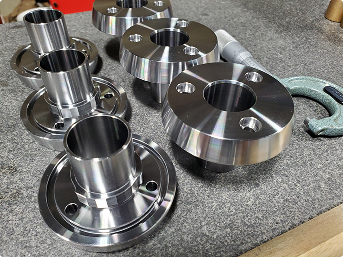
Precision 5-axis in Lake Zurich is available from local CNC shops capable of machining complex parts in a single setup — reducing errors, cutting lead times, and hitting tolerances that 3-axis machines simply can’t reach.
Quick answer — what you need to know:
- What it is: 5-axis CNC machining moves a cutting tool along three linear axes (X, Y, Z) plus two rotary axes (A and C), allowing the tool to reach almost any angle on a part without re-fixturing
- Key benefit: Complex parts that would require 3 or more separate setups on a 3-axis machine can be completed in one continuous operation
- Setup time savings: Up to 66% reduction in setup time compared to traditional 3-axis machining
- Who uses it: Aerospace, medical, oil and gas, packaging machinery, tube and pipe manufacturing, and industrial automation
- Materials: Aluminum, stainless steel, titanium, tool steel, brass, copper, and exotic alloys
- Local providers: Machine shops in and around Lake Zurich, IL offer 5-axis milling, turning, prototyping, and reverse engineering services
If you run a manufacturing operation — especially in tube and pipe production — getting parts made right the first time with fewer setups directly affects your uptime and output quality. That’s exactly where 5-axis machining delivers.
I’m Jarek Szpakowski, and from our shop in Lake Zurich, IL, ITSE Inc. has built a reputation delivering precision 5-axis in Lake Zurich for demanding industrial clients — including custom CNC components for tube mills, packaging equipment, and OEM automation systems. In the sections below, I’ll walk you through everything you need to evaluate 5-axis machining for your next project.
The Evolution of Precision 5-Axis Lake Zurich Machining
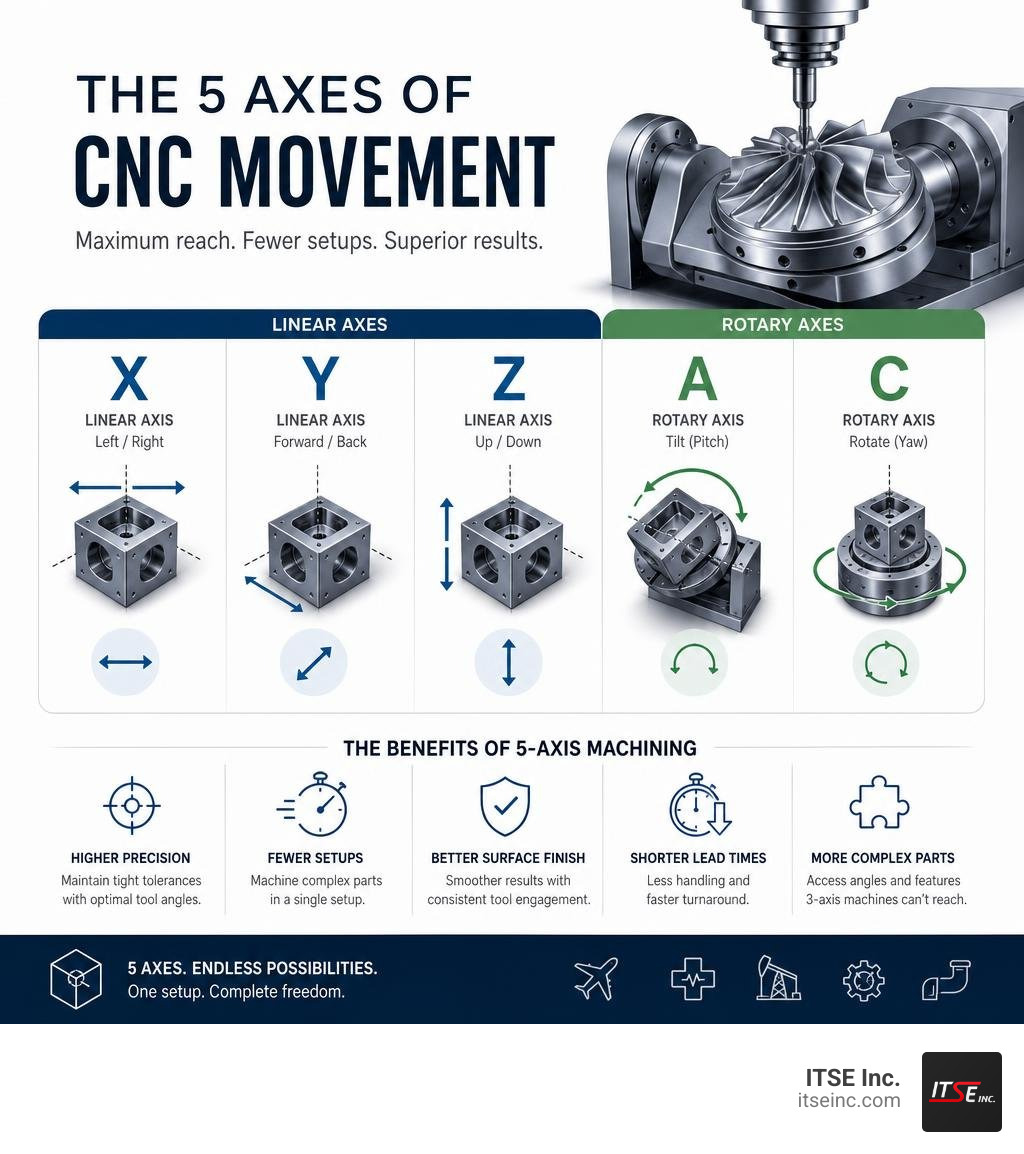
To truly appreciate the power of precision 5-axis Lake Zurich services, it helps to understand how we got here. Traditional manufacturing has long relied on 3-axis milling. In a standard 3-axis setup, the cutting tool moves along three linear axes:
- X-axis: Left to right
- Y-axis: Front to back
- Z-axis: Up and down
While 3-axis milling is incredibly reliable for flat plates, brackets, and simple geometric shapes, it hits a hard wall when facing complex 3D profiles. If a part has features on multiple sides, compound angles, or deep undercuts, the machinist must manually stop the machine, rotate the workpiece, re-clamp it in a new fixture, and re-calibrate the tool coordinates.
This process, known as re-fixturing, introduces opportunities for human error. Every single time a human hand touches the part to adjust its position, the margin of error increases.
Then came 4-axis milling. This evolution introduced a rotary axis (usually the A-axis), allowing the workpiece to rotate around the X-axis. This made it much easier to machine cylindrical parts or cut features around the perimeter of a component without manual intervention. However, it still limited the cutting tool to a single rotational plane.
Enter 5-axis machining. By adding a second rotary axis (typically the C-axis, which rotates around the Z-axis), the cutting tool can approach the workpiece from virtually any angle. This creates a continuous, fluid dance between the linear axes and rotary axes. Instead of five different setups, we can achieve complete multi-sided machining in a single, continuous operation.
Here is a quick comparison to help you visualize how these technologies stack up in a modern machine shop:
| Feature / Capability | 3-Axis Milling | 4-Axis Milling | 5-Axis Machining |
|---|---|---|---|
| Linear Axes | X, Y, Z | X, Y, Z | X, Y, Z |
| Rotary Axes | None | 1 (usually A or B) | 2 (usually A and C, or B and C) |
| Setup Requirements | Multiple setups for complex parts | Fewer setups for cylindrical parts | Single setup for highly complex parts |
| Setup Time Reduction | Baseline | Up to 30% reduction | Up to 66% reduction |
| Geometry Capabilities | Simple, flat, prismatic | Cylindrical, basic angular cuts | Compound curves, deep pockets, undercuts |
| Risk of Human Error | High (due to manual re-fixturing) | Moderate | Exceptionally Low |
By shifting to 5-axis machining, our customers in the Chicago metropolitan area—from Lake Zurich and Schaumburg to Elk Grove Village and Addison—benefit from an automated process that virtually eliminates manual handling. If you want to dive deeper into the high-speed multi-axis world, you can explore the technical variations of these setups in standard industry guides on multi-axis machining.
Key Benefits of Multi-Axis Milling for Complex Parts
When we talk about multi-axis milling, we are talking about unlocking design freedom. Designers no longer have to compromise on part geometry to accommodate the limitations of traditional manufacturing.
The core benefits of utilizing our advanced CNC Machining capabilities extend far beyond simply cutting metal. They change the entire economics of your production run.
- Minimized Tool Deflection: In 3-axis machining, reaching deep pockets or steep walls requires exceptionally long cutting tools. Long tools are prone to bending (tool deflection), which causes vibration, chatter marks, and poor surface finishes. With 5-axis machining, we can tilt the spindle or the table, allowing us to use shorter, highly rigid cutting tools that maintain perfect contact with the material.
- Flawless Surface Finishes: Because the tool can be oriented at an optimal cutting angle relative to the workpiece, the cutter operates at its ideal speed. This produces incredibly smooth surface finishes, often eliminating the need for manual polishing or secondary grinding operations.
- Reduced Tool Wear: Shorter tools vibrating less means they last significantly longer. This keeps tooling costs down and ensures consistent quality from the first part of a run to the last.
Achieving Unmatched Accuracy with Precision 5-Axis Lake Zurich Services
In high-precision industries, “close enough” is never enough. When you are manufacturing parts for aerospace systems, medical devices, or continuous-run tube mills, tolerances are measured in ten-thousandths of an inch.
The primary enemy of precision is the “setup stack-up error.” In a traditional shop, if a part requires four separate setups, any microscopic misalignment in the second, third, or fourth setup compounds. By the time the part is finished, the cumulative error can easily push the critical dimensions out of tolerance, turning expensive raw materials into scrap.
By utilizing precision 5-axis Lake Zurich services, we achieve what is known in the industry as “Done-in-One” machining. The raw block of material is clamped into the machine once, and the system handles the rest. Because the part never leaves the fixture until it is completely machined, the spatial relationship between every drilled hole, milled pocket, and contoured surface remains absolutely perfect.
This single-setup methodology is the gold standard for achieving highly precise 5-axis milling on complicated components.
Optimizing Production Efficiency and Reducing Lead Times
Time is money, and in the manufacturing sector, lead times can make or break a project. If your factory line in Aurora, Carol Stream, or Des Plaines is down because a custom wear part broke, every hour of delay costs thousands of dollars.
Traditional machining of complex parts is slow. You have to design and build custom fixtures for each setup, wait for operators to manually change configurations, and run separate inspection cycles at each stage.
Our multi-axis milling services streamline this entire workflow:
- Shorter Cycle Times: By cutting continuously across multiple faces, we reduce overall machine run times.
- Elimination of Fixture Lead Times: We do not need to build complex, expensive secondary fixtures for angled cuts. The machine’s rotary axes do the positioning work for us.
- Faster Turnaround: With setup time reduced by up to 66%, we can transition from a CAD model to a finished, inspected part in a fraction of the time.
For high-speed production demands, consolidating operations is key to optimizing these workflows and keeping your lines running smoothly.
Materials, Capabilities, and Industrial Applications in Illinois
The manufacturing landscape in Illinois is incredibly diverse. From the heavy industrial corridors of Chicago Heights and Elk Grove Village to the high-tech hubs of Schaumburg and Oak Brook, local businesses require a wide range of material expertise and production capabilities.
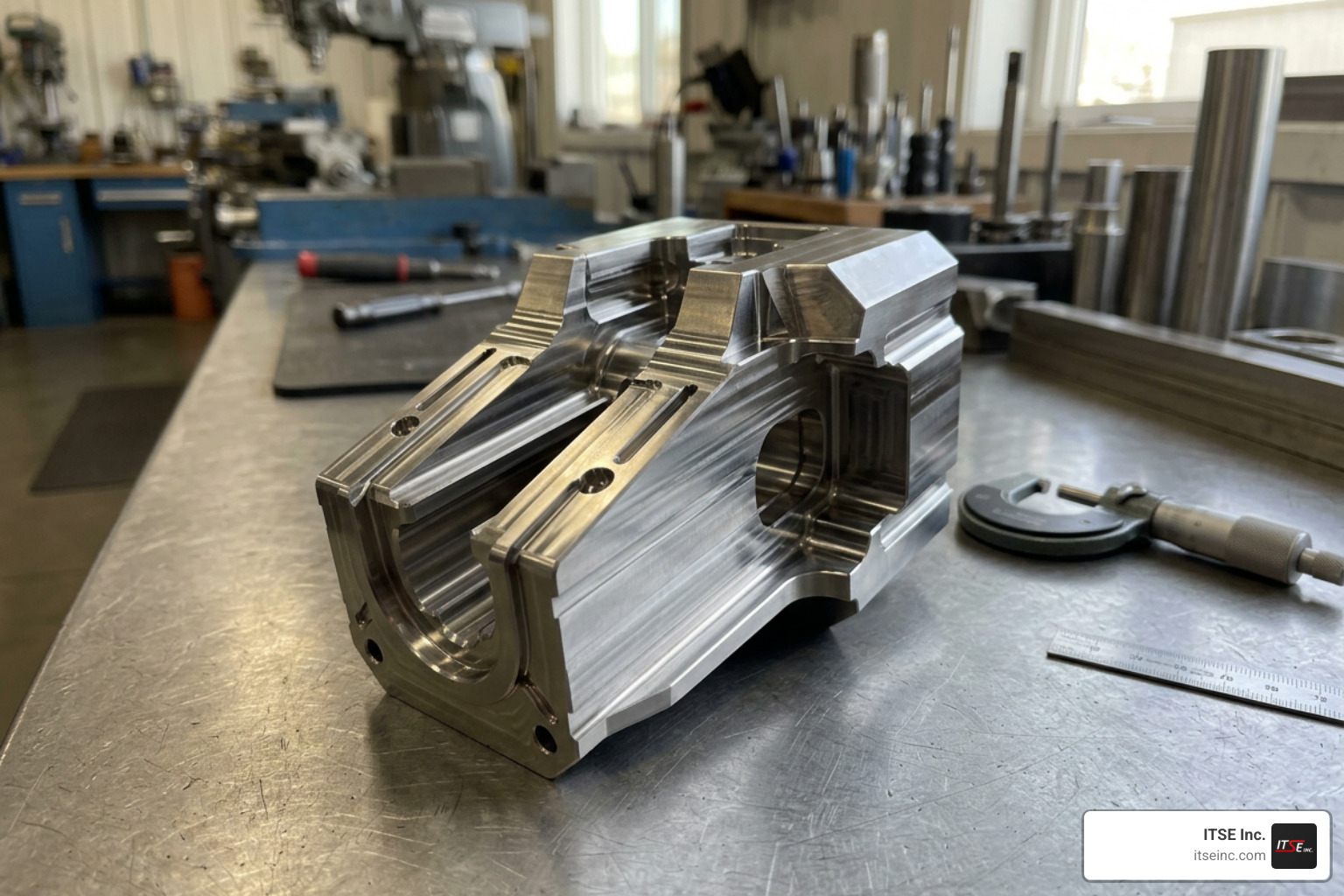
At our facility, we work with a vast array of metals and engineering materials to support these local industries:
- Aluminum (including cast aluminum): Lightweight, highly machinable, and excellent for aerospace, automotive, and packaging applications.
- Stainless Steel (303, 304, 316, 17-4 PH): Essential for food processing, medical devices, and corrosive chemical environments.
- Titanium: Highly valued in aerospace and medical implants for its incredible strength-to-weight ratio and biocompatibility.
- Tool Steel (D2, A2, O1, H13): Used for heavy-duty wear parts, dies, and custom tube mill tooling that must withstand extreme stress.
- Copper & Brass: Ideal for electrical components, heat exchangers, and low-friction bushings.
Our local capabilities are specifically tailored to support everything from quick-turn engineering prototypes to medium-volume production runs. Whether you need a single, highly complex replacement shaft or a batch of several hundred precision brackets, we have the capacity to deliver.
To learn more about our specific local capabilities, you can visit our dedicated Precision 5-Axis CNC Machining Services in Lake Zurich page.
Advanced Software and Technology in Precision 5-Axis Lake Zurich Shops
Hardware is only half of the equation. A state-of-the-art 5-axis machine is only as good as the software programming it and the machinist operating it.
To program these complex multi-axis movements, we utilize advanced CAD/CAM software like Siemens NX and SolidWorks. This software allows us to:
- Perform Collision Avoidance: Before a tool ever touches metal, we run full 3D digital simulations of the entire machining cycle. This ensures the cutting tool, spindle, and machine table never collide, protecting your parts and our equipment.
- Implement Adaptive Milling: This technology automatically adjusts the toolpath and cutting speed in real time based on material resistance, maximizing material removal rates while minimizing tool wear.
- Leverage Multi-Axis Turn/Mill Integration: Consolidating turning and milling into a single machine toolpath allows us to create highly intricate cylindrical components with off-axis drilled holes or milled flats.
To see how high-precision turning and sliding headstock technology complement these multi-axis operations, advanced shops often integrate Swiss turning capabilities alongside multi-axis milling to handle complex cylindrical components.
Frequently Asked Questions About Precision Machining
We speak with manufacturing managers, purchasing agents, and design engineers every day. Here are some of the most common questions we hear regarding precision 5-axis Lake Zurich services and multi-axis CNC milling:
What is the main advantage of 5-axis machining over 3-axis?
The primary advantage is setup reduction. A 5-axis machine can access five sides of a part in a single setup, whereas a 3-axis machine would require multiple setups, custom fixtures, and manual intervention to achieve the same result. This dramatic reduction in handling directly translates to greater precision, shorter lead times, and lower overall labor costs.
What materials are best suited for 5-axis CNC milling?
5-axis milling is highly versatile and works with virtually any machinable metal or plastic. However, it is exceptionally beneficial for hard-to-machine materials like titanium, stainless steel, and tool steels. Because we can position the tool at the perfect angle, we can use shorter, stiffer cutters. This prevents tool deflection, minimizes chatter, and ensures a beautiful surface finish on tough, dense materials.
How do local shops ensure quality and certification compliance?
Reputable machine shops maintain strict quality management systems, often certified to ISO 9001 (general manufacturing) or AS9100 (aerospace and defense standards). Quality is maintained by:
- Performing design-for-manufacturability (DFM) reviews before cutting.
- Using coordinate measuring machines (CMM) and digital optical comparators to verify dimensions.
- Integrating real-time inspection probes directly inside the CNC machine to measure critical features before the part is even unclamped.
Conclusion
In the competitive world of modern manufacturing, staying ahead means embracing the best technology available. Whether you are operating a high-speed packaging line in Schaumburg, assembling aerospace components in Elk Grove Village, or running a continuous tube mill in Chicago Heights, precision 5-axis Lake Zurich services offer the accuracy, efficiency, and speed your business needs to thrive in 2026.
At ITSE Inc., we don’t just cut metal—we solve complex manufacturing puzzles. We manufacture precision OD bead choppers, ID scarfing systems, and custom tube mill equipment for the tube and pipe industry, emphasizing US-made quality and tailored solutions.
If you have a legacy part or an undocumented component with no drawings, our engineering team can use SolidWorks to handle complete reverse engineering. Bring us your physical part, and we will measure, model, and machine a perfect replacement.
Ready to see what precision multi-axis machining can do for your operation?
- Learn more About our team and our commitment to quality.
- Explore our specialized tube mill Products.
- Request a quote for your next custom project on our main CNC Machining page.
Let us be your trusted, local manufacturing partner right here in the heart of Illinois.